NODE-303 OPEN-LABEL STUDY
Open-label safety data in patients with PSVT who had not received a test dose of CARDAMYST (n=503)1
Within 24 hours of CARDAMYST use, 776 treatment-emergent adverse events were reported by 269 patients (53.5%). A total of 22 events in 16 patients (3.2%) were considered severe. No serious treatment-related adverse events were reported1
In NODE-303, most treatment-emergent adverse events within 24 hours of CARDAMYST administration were localized to the nasal administration site (nasal discomfort, 30.2%; nasal congestion, 13.9%; rhinorrhea, 13.1%; epistaxis, 7.4%)1
Conversion to sinus rhythm in patients with confirmed PSVT (n=312)1
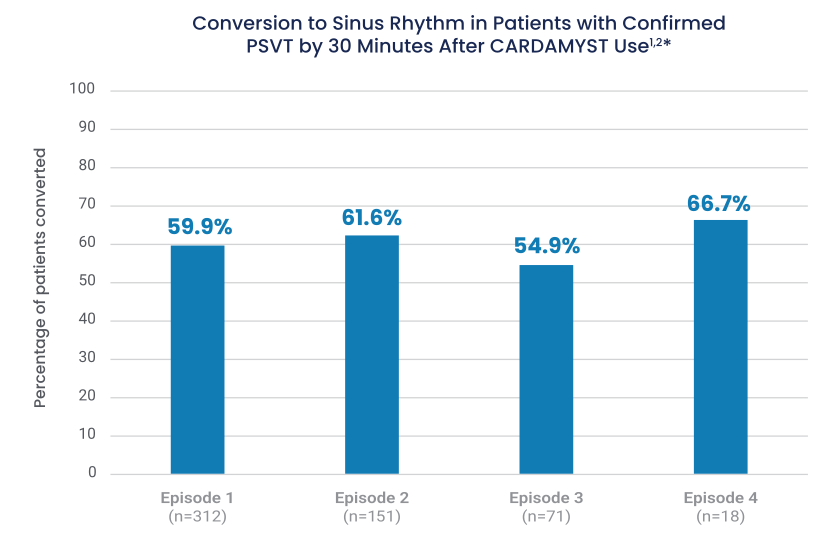
All ECGs were validated to confirm PSVT as the presenting arrhythmia, with subsequent conversion to sinus rhythm that persisted for at least 30 seconds.1
Across all episodes, the median times to conversion was 17.0 minutes1
Among patients with at least 2 confirmed PSVT episodes (n=151), 71.5% (108/151) successfully converted to sinus rhythm with CARDAMYST by 60 minutes in the first episode. Of these, 80.6% (87/108) converted with CARDAMYST during their second episode1
Even if the previous attempt was unsuccessful, over half (55.8%) of patients who didn’t convert in their first episode successfully converted on the second episode1
Of patients who experienced a fourth PSVT episode, 94.4% (17/18) had converted to sinus rhythm within 60 minutes with CARDAMYST on at least 1 of their prior 3 episodes1
Study Limitations1:
NODE-303 was an open-label single-arm study
There was no formal statistical testing for efficacy endpoints. Data from the safety population were limited to summary descriptive statistics
Limitations of the recording device (eg, 2-lead configuration, recording quality) introduced the possibility of misclassifying some PSVT episodes as AV nodal-dependent when they were not
Conclusions regarding safety and efficacy cannot be made based on this data
This information is not included in the CARDAMYST Prescribing Information
NODE-303 Study Design1
The NODE-303 study was a multi-center, open-label, single-arm phase 3 study that evaluated the safety and efficacy of CARDAMYST in adults with a history of symptomatic PSVT. NODE-303 had a “real-world” design, with no supervised test dose requirement and no exclusion of patients with a history of atrial fibrillation/flutter, and allowed up to 4 PSVT episodes to be treated.
PSVT treatment
Patients applied an ECG monitor at symptom onset and self‐administered a single dose of CARDAMYST if a vagal maneuver was unsuccessful. A repeat dose of CARDAMYST was administered if symptoms persisted 10 minutes after the first dose.
Patient populations
The study enrolled 1116 patients, of whom 503 treated ≥1 perceived PSVT episode (safety population). Among 312 patients, 552 treated events were independently confirmed to be AV—nodal-dependent PSVT episodes with evaluable ECG data (efficacy population).
Key baseline patient characteristics from the safety population
Patients had a median age of 56 years (range, 19-88 years) and were 68% female. The majority of patients, 71%, were taking a concomitant beta blocker or calcium channel blocker.

Favorable safety profile
Most adverse events were localized to the nasopharynx.3,4

How to use CARDAMYST
Get helpful step-by-step instructions to share with your patients.

Connect with a rep
Get helpful information on CARDAMYST.