RAPID STUDY PRIMARY ENDPOINT
Patients were >2x as likely to convert to sinus rhythm within 30 minutes with CARDAMYST (etripamil) nasal spray1,2
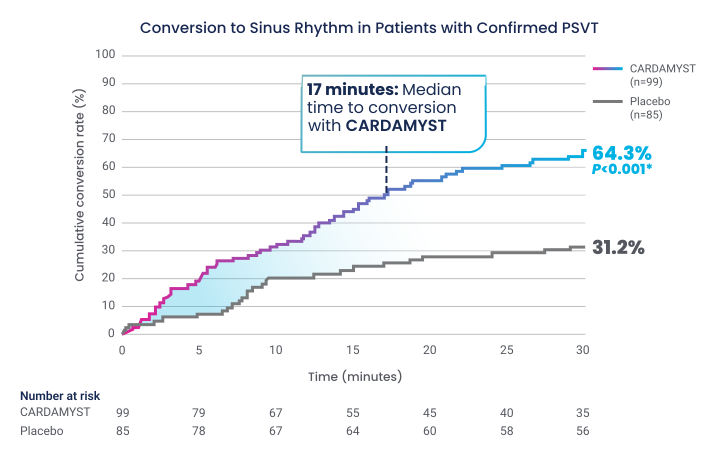

faster conversion with CARDAMYST
Median time to conversion: 17 minutes with CARDAMYST vs 54 minutes with placebo
*Conversion at 30 minutes: 64% and 31% for CARDAMYST and placebo, respectively. Hazard ratio: 2.6 (95% CI, 1.7-4.2; P<0.001).
Patients who self-administered CARDAMYST (etripamil) nasal spray maintained persistent treatment effects up to 5 hours3
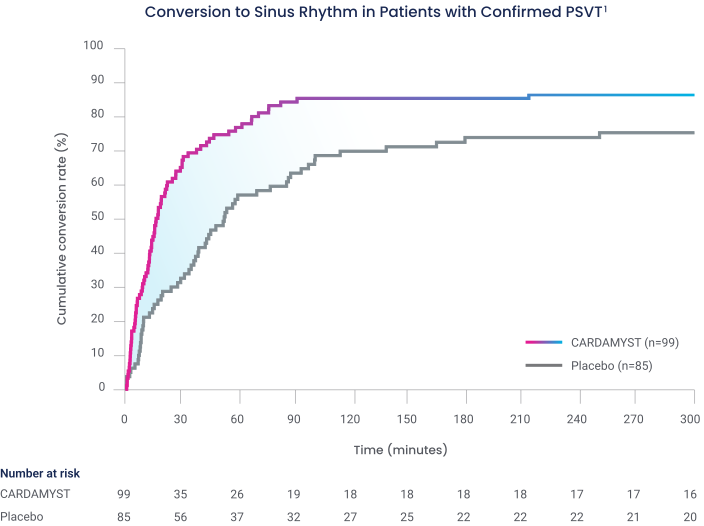

3 out of 4 patients converted with CARDAMYST at 60 minutes1
74% (73/99) conversion with CARDAMYST vs 56% with placebo (48/85)
PSVT was not confirmed in 28% of patients (n=71/255) who self-administered study drug due to: missing ECG data (4%), resolution of PSVT prior to dosing (5%), or other rhythm diagnoses (19%). In an analysis that assumed that these patients did not convert, rates of conversion to sinus rhythm within 30 minutes were 50% for patients who took CARDAMYST vs 23% with placebo.1
Results for the primary efficacy endpoint were generally consistent across most major subgroups, including those on concomitant calcium channel or beta blockers1,2

Treatment effects observed as early as 5 minutes with CARDAMYST2,3
19.2% converted with CARDAMYST at 5 minutes vs 7.1% with placebo2,3†
Exploratory analysis: Not evaluated for statistical significance as a result of sequential testing procedure for secondary endpoints.2,3
†CARDAMYST prolonged the baseline PR interval by 8% to 10%, ~5 minutes following an intranasal dose of 70 mg.1

33% fewer ED visits with CARDAMYST vs placebo2,4
14% (14/99) of patients using CARDAMYST sought additional medical intervention vs 21% (18/85) using placebo2,4
Analysis not powered for statistical significance. Interpret with caution.
Review the complete findings from the pivotal RAPID study in The Lancet

Favorable safety profile
Most adverse events were localized to the nasopharynx.1,2

How to use CARDAMYST
Get helpful step-by-step instructions to share with your patients.

Connect with a rep
Get helpful information on CARDAMYST.