
CARDAMYST™ nasal spray works fast to help restore normal heart rhythm

CARDAMYST (etripamil) restored normal heart rhythm in 17 minutes versus 54 minutes with placebo
More than twice as many people converted to normal heart rhythm within 30 minutes after taking CARDAMYST for a PSVT episode vs placebo (64% with CARDAMYST vs 31% with placebo).
Across 2 clinical studies, there were 39% fewer emergency department (ED) visits for a PSVT episode with CARDAMYST than with placebo.
14% (28/206) of patients who took CARDAMYST for a PSVT episode sought ED treatment vs 22% (30/134) of patients who took placebo. This means there was an overall reduction of 8.8%.
Because everyone is unique, your individual experience and results may differ.
If your PSVT symptoms do not improve within 20 minutes after the second dose of CARDAMYST, call your healthcare provider or get emergency medical help right away.
CARDAMYST is a first-of-its-kind, FDA-approved nasal spray that can help stop a PSVT episode anytime, anywhere*†
Patients should administer CARDAMYST in a sitting position and should not exceed 2 CARDAMYST devices (140 mg) within a 24-hour period.
†Store CARDAMYST at room temperature between 68 °F to 77 °F (20 °C to 25 °C).
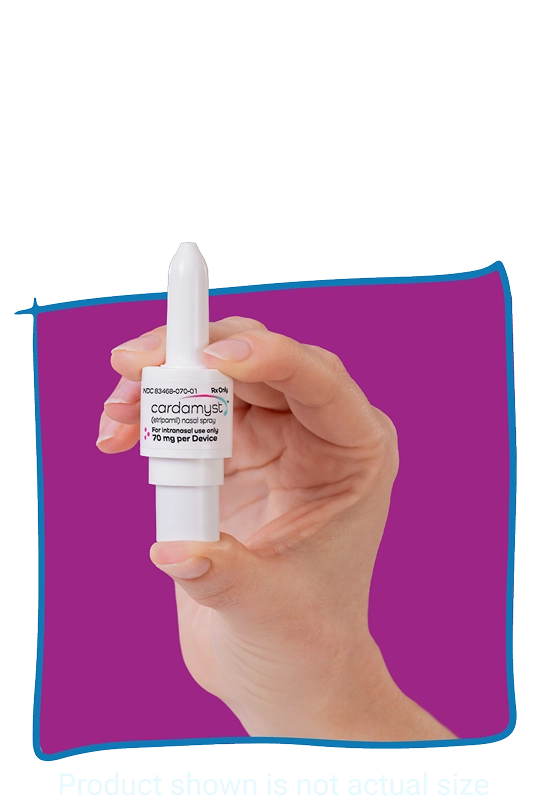

CARDAMYST is sprayed into the nose and absorbed quickly into the bloodstream, where it rapidly circulates throughout the body.

Because CARDAMYST is a ready-to-use nasal spray, you can administer it without mixing or priming.

CARDAMYST is small, lightweight, and compact enough to slip right into your pocket, purse, or gym bag.
In clinical studies, CARDAMYST was generally well tolerated
The most common side effects of CARDAMYST include nasal discomfort, nasal congestion, runny nose, throat irritation, and nosebleed. In the clinical study, these were generally mild and short-lived.
CARDAMYST was safely administered to people taking beta-blockers or calcium channel blockers.
CARDAMYST is not right for everyone with PSVT. Before using CARDAMYST, tell your doctor about all the medicines you take and your medical conditions, including if you have a history of fainting, have low blood pressure, are pregnant or plan to become pregnant, or are breastfeeding or plan to breastfeed. It is not known if CARDAMYST will harm your unborn baby.
Talk to your healthcare provider about CARDAMYST.
Stay in the know
Sign up to have helpful information about CARDAMYST sent to you.
How to use CARDAMYST
Get step-by-step instructions so you can self-administer CARDAMYST with confidence.